 FIELD SERVICE ROUTINE
Visual and Mechanical Inspection Routines
A systematic refrigeration inspection evaluates the mechanical state of plant room equipment and retail floor fixtures before minor wear escalates into system outages. Professional inspections evaluate several core subsystems:
1. Condenser Assembly & Heat Rejection Areas
Condensers discharge absorbed heat to the outside atmosphere (often on supermarket rooftops). Technicians inspect fin matrices for dirt buildup, airborne debris, or corrosion, ensuring fans rotate freely without abnormal motor vibration.
2. Evaporator Coils & Expansion Assemblies
Inside display fixtures and cold storage rooms, inspections focus on coil fin alignment, thermostatic or electronic expansion valve (EEV) modulation, and defrost heater element continuity.
3. Piping, Insulation & Fasteners
Suction and liquid line piping must be checked for vibration dampening, pipe clip integrity, and insulation degradation to prevent pipe fatigue and external condensation sweating.
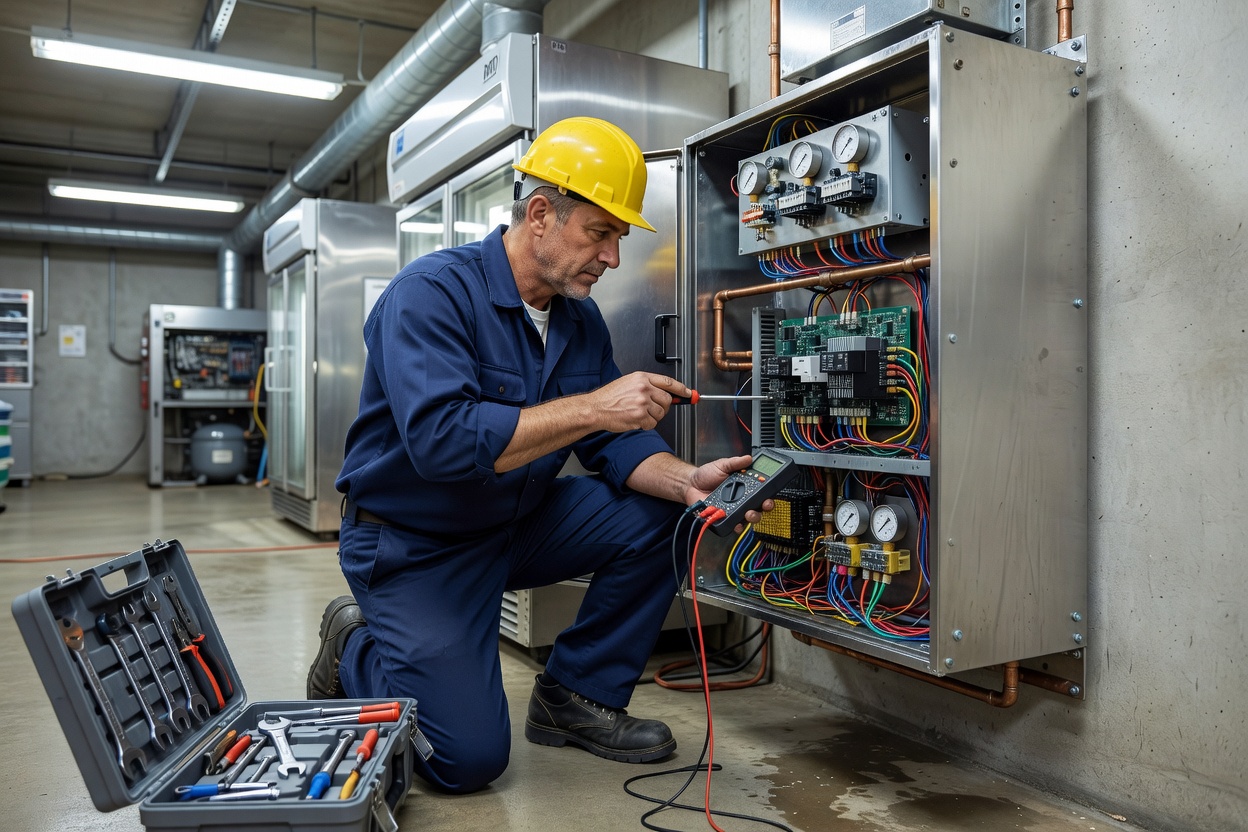
4. Electrical and Control Switchboards
Inspection of contactors, circuit breakers, wiring terminations, and controller relays to identify thermal discolouration or loose connections before electrical faults occur.
Refrigerant Circuit Considerations (High-Level Overview)
Modern supermarkets operate using diverse refrigerants—ranging from traditional HFC blends to natural refrigerants such as CO2 (R744) operating at transcritical pressures. Qualified technicians monitor system sight glasses, moisture indicators, and pressure transducers to verify proper liquid seal before expansion devices.
Safety Notice: Pressurized refrigeration systems and electrical control panels contain severe hazards. All diagnostic adjustments, gas testing, and component replacements must be performed exclusively by qualified, certified refrigeration service engineers adhering to local statutory safety codes.
Core Steps in a Standard Service Visit
| Phase | Primary Focus | Outcome / Record |
|---|---|---|
| Pre-Check | Review historical telemetry alarm logs and store manager notes. | Identifies target circuits showing thermal drift. |
| Mechanical | Clean coils, inspect fan blades, lubricate bearings where required. | Restores nominal airflow across heat exchangers. |
| Electrical | Test defrost heater amps, verify sensor probe calibration. | Ensures accurate controller feedback and safe defrosts. |
| Sign-Off | Document work performed in store refrigeration asset logbook. | Updates the permanent maintenance history log. |
The Role of Technician Service Documentation
Thorough documentation protects retail operators by establishing a verifiable maintenance audit trail. Every service visit report should include:
- Equipment asset identifier and physical store location.
- Operational readings recorded before and after servicing (e.g., suction pressure, discharge air temperature).
- List of parts adjusted, cleaned, or replaced.
- Technician qualification details, date, and store management sign-off.
Explore Preventive Maintenance Planning
Learn how structured recurring service schedules reduce store disruptions and extend cooling equipment lifecycles.