 ENCLOSURE SYSTEMS
Retail Cooling Enclosures: Open vs. Closed Configurations
Supermarkets employ two primary fixture formats for retail food presentation:
1. Open Multi-Deck Cabinets
Open cabinets provide frictionless grab-and-go access for shoppers. Their thermal performance depends entirely on an unbroken laminar air curtain discharged at the top front and drawn down to the return grille. Any mechanical misalignment of the honeycomb grille or ambient store drafts exceeding normal thresholds can disrupt this air curtain, causing warm, humid room air to enter the case.
2. Glass-Door Display Cabinets
Fixtures fitted with multi-pane double or triple glazed doors reduce convective heat gain significantly. However, they introduce mechanical wear points: torsion spring door closers, magnetic gaskets, and glass anti-sweat electrical heaters that prevent surface condensation.
Walk-In Cold Rooms and Holding Freezers
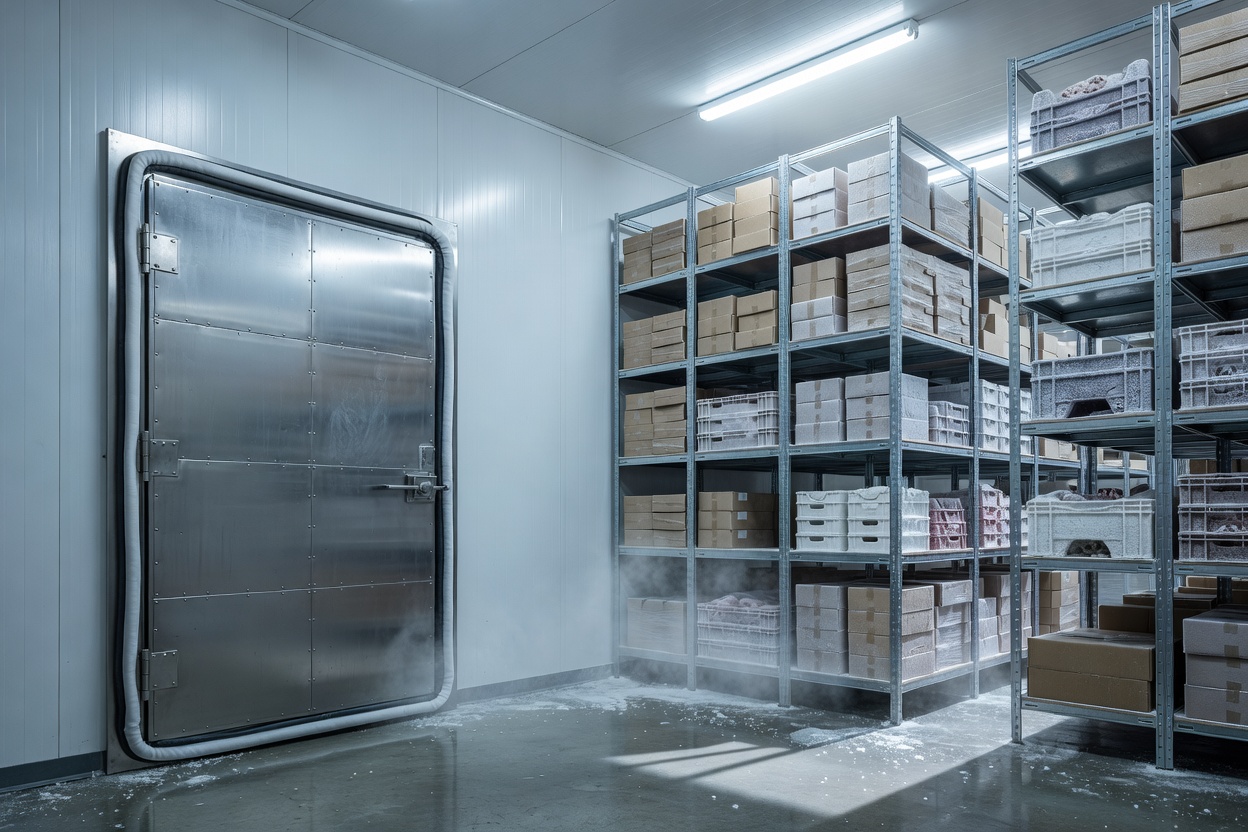
Located in store backrooms, cold rooms provide bulk buffer storage for meat, produce, bakery, and dairy. Critical inspection focal points include:
- Insulated Wall and Ceiling Panels: Checking panel joints for vapor barrier integrity to avoid moisture entering polyurethane insulation cores.
- Heavy-Duty Door Closures: Ensuring self-closing hinges, internal emergency release handles, and floor sweep gaskets seal tightly against the threshold.
- Pressure Relief Vents: Verifying heated relief ports in low-temperature freezers are functional to prevent structural panel collapse during defrost pressure changes.
Evaporators, Fans & Airflow Management
The evaporator unit inside each cabinet or cold room cools circulating air. Regular observation must confirm:
Fan Motor Operation
Evaporator fan motors circulate air through the cooling coil matrix. Failed fan bearings or broken impellers immediately cause uneven chilling, leading to hot spots in the fixture.
Airflow Path Obstructions
Product packages pushed too far back against rear discharge risers or stacked over return air grilles restrict airflow, leading to ice buildup on the coil.
Condensate Drip Trays & Drain Heaters
During defrost cycles, melted water drops into the drain tray and exits through insulated pipes. If drain heaters fail in frozen cases, ice blocks the drain line, causing water to pool and refreeze on the case floor.
Condensation, Frost & Seal Verification
Excessive frost accumulation is almost always a symptom of moisture ingress rather than poor refrigeration capacity. Store teams should watch for:
- Torn or Hardened Gaskets: Magnetic gaskets that have become brittle or split fail to seal, admitting ambient humidity that condenses and freezes.
- Misting Glass Doors: Fogging or condensation between glass panes indicates a failed hermetic seal on the glazed unit.
- Ceiling Drips in Cold Rooms: Condensation dripping from cold-room ceiling evaporators suggests either poor air circulation or incomplete defrost termination.
Learn About Field Inspection & Servicing
Read about hands-on mechanical diagnostics, electrical testing, and technician service records.